







Best Pickleball Paddles for 3.5 Players
I was standing at the baseline, holding a cheap pickleball paddle I’d bought off Amazon, watching a ball sail two feet past the baseline for the third time that game. I was a solid 3.0, desperate to break into the 3.5 bracket, but I felt stuck. My equipment wasn’t doing me any favors, but I didn’t want to drop $250 on a paddle just because a pro used it on TV.
If you are reading this, you are likely in that exact spot right now. You aren’t a beginner anymore. You understand the soft game, you’re working on your third-shot drops, and you’re starting to see the court differently. But you’re asking yourself: “Do I really need a $280 paddle to compete at a 3.5 level?”
The short answer is no. The long answer is what this article is all about.
If you’re searching for “best pickleball paddles for 3.5 players”, you want one clear thing: the best performance you can get for your budget. That’s exactly how I think about paddles after three years of playing and testing dozens of models: maximize control and consistency at the net, get enough pop on offensive shots, and keep fatigue low through a predictable weight profile. My goal isn’t to sell you the most expensive gear; it’s to help you find the highest quality paddle that fits your budget and actually improves your game.
The 3.5 Player’s Dilemma: Control vs. Power
When you’re hunting for the best pickleball paddles for a 3.5 players, you’re usually fighting one of two battles.
The Pop-Up battle:
You’ve got power, but your dinks and resets sit up just long enough for opponents to end the point. Control is the missing piece.
The Noodle-Arm battle:
Your soft game feels fine, but when a sitter shows up — you still can’t put it away. Now you’re chasing real pop.
And here’s the problem:
The paddle market has never been more confusing. Between trampoline-style “Gen 3” power paddles and the latest “Gen 4” foam cores promising giant sweet spots, it’s hard to separate marketing noise from real on-court results.
Every ad says you need more power. But what actually makes players improve tells a very different story.
Analysis of 3.5 Skill Assessment
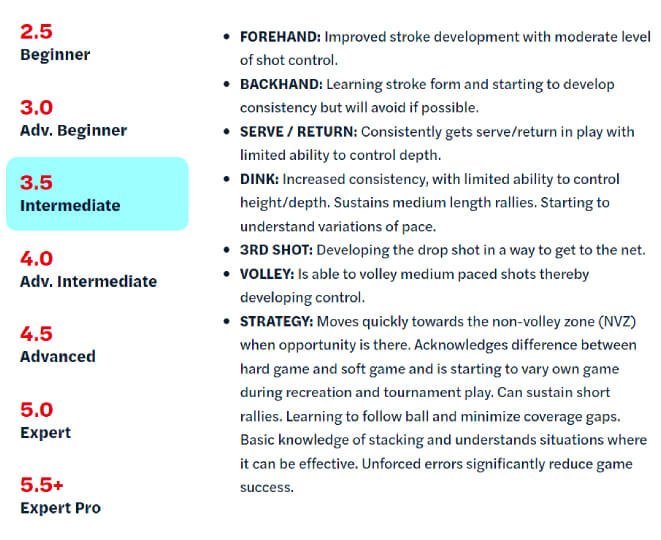
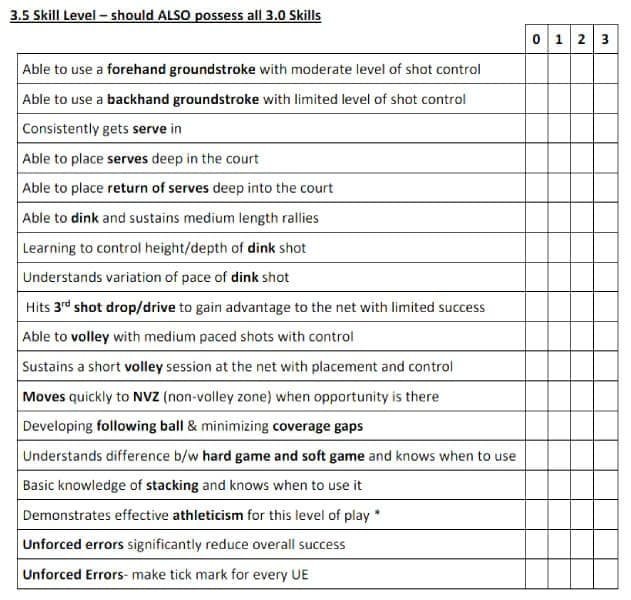
I pulled the official skill assessment charts to look at exactly what separates a 3.5 from a 4.0. The definitions are revealing. According to standard skill ratings, a 3.5 player is defined by having a “backhand groundstroke with limited level of shot control“. Furthermore, while you might be sustaining rallies, you are likely still “learning to control height/depth of dink shots“.
This is the critical data point: “Unforced errors significantly reduce overall success”.
If you are losing games, it isn’t because you didn’t hit the ball hard enough. It is because your 3rd shot drop had “limited success” and hit the net, or your return of serve lacked “ability to control depth”.
Why “Control” is Your Ticket to 4.0
Because of this “control deficit” inherent in the 3.5 level, buying a high-powered, poppy paddle is often a mistake. A paddle that launches the ball off the face too quickly will make your “limited” backhand control even worse.
For the vast majority of intermediate players, the best pickleball paddle for a 3.5 player is one that increases dwell time—holding the ball on the face for a fraction of a second longer. This mitigates the “unforced errors” by giving you a larger margin for error on your dinks and drops.
Therefore, buying a pure “power paddle” often backfires. It amplifies the very errors that keep you stuck in the 3.5 bracket.
So…Your best choice is to find a paddle that can offer enough control performance while also having power and spin, allowing you to raise your level to 4.0.
Let’s look at the paddles that actually help you control the soft game and cut down unforced errors.
Best Pickleball Paddles for 3.5 Players - List
Best Overall Balance (Control, Spin, Pop)
The ideal paddle for a 3.5 player is often an “all-court” paddle that leans heavily on control. The following two models are frequently cited as the standard for players looking to advance their touch game while maintaining an offensive edge.
Six Zero Double Black Diamond Control -16mm

Specs:
- Thickness: 16mm
- Weight range: 8.1oz average
- Shape: Hybrid (16.3 x ~7.7)
- Handle length: 5.3″
- Grip circumference: 4.25″
- Face: Toray T700 carbon fiber
- Core: 8mm Honeycomb polymer
- Swing weight: 114
- Spin: 2018
- Type: Control/All-court
Price:$180 at Paddlesshop
When I first switched to the DBD, the very first thing I noticed was how fast it felt in my hand.
The hybrid shape with the curved top really does cut through the air quicker than a traditional square paddle. Quick hands at the kitchen feel easier, and reactions on hand battles feel just a half-step faster.
But the real magic is the thermoformed edge.
That construction gives the paddle a crisp, lively pop that I honestly haven’t felt from most non-thermoformed models. The response is clean — not mushy — and you immediately notice it on counter-punches and drives.
For a 3.5 player, though, this paddle can almost be dangerous — in a good way.
The sweet spot is absolutely massive thanks to its high twist weight.
Even when I miss the center slightly on dinks or soft blocks, the paddle stays stable enough to keep the ball on line and over the net. That built-in forgiveness creates consistency — and that consistency is exactly what pushes a 3.5 player toward the 4.0 level. Fewer random errors mean longer rallies, cleaner point construction, and a lot more confidence at the kitchen.
Pros
-
Elite-level spin — mine regularly touches around 1900 RPM
-
Huge sweet spot that forgives off-center contact
-
Excellent durability from the thermoformed build
Cons
-
Plays a little “poppy” for heavy hands.
If you tend to grip tight or over-hit soft shots, this paddle will amplify that tendency. You really need to learn to relax your grip and trust the paddle on dinks and resets.
From a spec standpoint, the DBD fits perfectly into what I recommend for intermediate players.
The 16mm honeycomb core adds cushion and stability, which helps absorb pace and extend dwell time — both essential for reliable soft shots, drops, and resets. The paddle is designed for control-first players, and you feel that in how predictable it is when slowing the game down.
The permanently textured face also makes a noticeable difference. It grabs the ball well and maximizes spin, which is huge for shaping third-shot drops, rolling topspin dinks, and creating safer margin over the net.
JOOLA Ben Johns Hyperion CFS -16mm

Specs:
Surface:Carbon Friction
Core (mm): 16
Control:93
Power:94
Spin:95
USAP Approved:Yes
Class:Professional
Average Weight:8.4oz
Paddle Length:16.5in
Paddle Width:7.5in
Grip Type:Ridge
Grip Length:5.5in
Grip Circumference:4.25in
Price: $159.95 from Joola
What stands out with this paddle right away is the size of the sweet spot.
It feels huge on contact, which makes a big difference when you’re living in the soft game. My dinks settle lower, my resets land more predictably, and I can shape topspin without having to swing harder than I want to. Control feels effortless, but the spin is still there when I need to create margin over the net.
Despite that control-first feel, the paddle doesn’t feel dead.
It’s solidly built, and I still get plenty of pace on serves and put-away shots when I step into the ball. It manages that rare balance of touch and finish power — the kind of “do-everything” paddle that lets me stay aggressive without giving up precision.
The Hyperion is known for its plush, stable feel and forgiving response — and that reputation makes total sense once you hit with it. The stability across the face is excellent, so even slight off-center hits stay on track instead of dying or sailing long. For a 3.5 player, that forgiveness is huge when you’re trying to clean up unforced errors and extend rallies rather than gift points away.
Its Charged Carbon Surface plays a big role here. The face provides a really clean blend of power and control — not overly poppy, not muted — just predictable. That consistency helps build real confidence in both groundstrokes and dinks. I find myself swinging freer on drops and resets because I know the paddle isn’t going to overreact when I’m a little late or a little off-center.
Best for Maximum Dwell Time
If your number one priority is fixing the “pop-up” problem and absolutely maximizing control and soft touch, a thicker-cored paddle is your best bet.
Selkirk LUXX Control Air Series (19mm Core)

Specs:
Midweight Range: 7.8 – 8.1 oz
Grip Circumference: 4 1/4″
Grip: Selkirk Geo Grip
Handle Length: 5.35”
Paddle Length: 16.45″
Paddle Width: 7.5”
Face: Florek Carbon Fiber
Core material: Thikset Honeycomb
Core Thickness: 20mm
Edge Guard: Aero-DuraEdge Edgeless
Price: $150 from Selkirk
I have personally tested the 19mm Selkirk LUXX Control Air(The original version. Now they have launched a new version), the overall goal of the Selkirk LUXX series is very clear — it’s built for pure control.
That extra-thick 19mm core (with most paddles sitting around 16mm) makes a real difference on court. You feel it immediately. The paddle absorbs pace exceptionally well, the ball stays on the face longer, and everything about your soft game calms down. Dinks drop shorter, resets feel more cushioned, and those annoying pop-ups and random flyers become a lot easier to avoid.
In simple terms, the LUXX is a paddle that does some of the “braking” work for you. If your touch isn’t perfect yet — which is true for most 3.5 players — the paddle helps slow the ball down and gives you far more margin during kitchen exchanges.
If the 19mm version feels like too much control — or you want something quicker through the hands — I’d point you toward the Selkirk SLK Halo Pro XL (16mm) instead. You keep that control-first feel but gain a bit more responsiveness and hand speed, which can feel more balanced for players who still want a little pop on counters and put-aways.
Best Value Control Paddle
If you are looking for a high-quality paddle with the raw carbon surface and 16mm thick core technology at a lower price point, there is a clear leader for 3.5 players.
Vatic Pro Prism Flash 16mm

Specifications:
- Surface – Raw TORAY T700 Carbon Fiber with heat compressed texturing
- Unibody Foam Inject Walls for an increased sweet spot and added control
- Average Weight 16mm – 7.9 – 8.2oz
- Total Length SH – 16.25 Inches
- Total Length LH – 16.375
- Width SH – 7.7 Inches
- Width LH – 7.625
- Grip Circumference – 4.125 Inches
- Grip has 2 polyurethane inserts to reduce shock and help with tennis elbow
- Core – Optimized C7 Polymers and high-grade performance honeycomb
- Core Thickness – 16mm
- Edge Guard: Anti-Abrasion TPU
Paddle Price:$89.99 from Vatic Pro used code:Paddlesshop
I recommend this paddle to almost everyone in my local league who’s upgrading from a cheap Amazon starter paddle.
And the reason is simple — this thing is an absolute reset machine.
The core feels incredibly plush. When someone speeds the ball up at me or tries a body shot, the Prism Flash just eats the pace. Instead of the ball jumping off my face or flying long, it dies nicely into the kitchen. Those panic blocks and awkward digs suddenly turn into playable resets — which is a massive confidence boost for any 3.5 player.
Unlike the DBD above, this paddle doesn’t bring a ton of built-in pop.
You have to create your own power on drives and put-aways. But honestly, at the 3.5 level, that tradeoff is usually worth it. Keeping the ball in play, winning the soft exchanges, and forcing errors will win you far more points than trying to blast winners that rarely land.
Pros
-
Elite control — one of the best reset and dink paddles I’ve hit
-
Outstanding value — you’re getting tech that normally lives in much higher price brackets
-
Zero vibration issues — ridiculously arm-friendly (great if your elbow gets cranky)
Cons
-
Limited finishing power — you’ll need a fuller swing to end points
For the price, this paddle is crazy good.
It keeps showing up in budget recommendations for a reason, and it’s usually sitting right around the $99 range — which feels absurd given how it plays. In my hands, the control and spin performance honestly resemble what I’ve felt from far more expensive Gen 3 and Gen 4 paddles — just without the price tag or power bias.
This paddle has a pure control-first personality. There’s no artificial boost, no unpredictable pop — just a predictable response that lets you build points instead of rushing to finish them. For players still tightening up technique, footwork, and shot selection, that kind of calm, consistent feedback is exactly what accelerates improvement.
Best Pickleball Paddles for 3.5 Women Players
I often get asked about the best pickleball paddles for 3.5 women players. While “women’s paddles” is mostly a marketing term, there are legitimate physiological differences to consider—specifically regarding hand speed and grip circumference.
Many stock paddles come with a 4.25″ or 4.3″ grip and are head-heavy, which can slow down your hands at the net. For my female drilling partners who are crushing it at the 3.5 level, I almost always recommend: Vatic Pro Prism Flash paddle or JOOLA Anna Bright Scorpeus 14mm paddle.
Why the Prism Flash: It has a very low “Swing Weight” (usually around 114). This means it feels light in the hand, allowing you to win hand battles at the net without fatigue.
Why the Scorpeus (14mm): If you have a higher budget, the Scorpeus is a “wide-body” paddle. It has a huge sweet spot but a short handle, making it incredibly maneuverable. It’s built for fast hands and defensive blocks.
Key Advice for Women players: Pay attention to the Swing Weight, not just the static weight. A 7.8oz paddle can feel heavy if the weight is all at the top. Look for a swing weight under 115 for maximum hand speed.
How to Choose Your Paddle
Don’t just buy what I tell you. Use this step-by-step guide to make your own decision.
Step 1: Identify Your “Miss”
-
Do you pop the ball up too high? -> Go for a 16mm Control Paddle (Vatic Prism Flash).
-
Do you hit the ball into the net or lack power? -> Go for a Thermoformed Paddle (Six Zero DBD or Bread & Butter Loco).
Step 2: Check the Handle Length
-
Do you use a two-handed backhand? -> You need a 5.5″ handle or longer. (Look for “Elongated” shapes).
-
One-handed backhand? -> Standard 5.3″ or Hybrid handles are fine.
Step 3: Budget Reality Check
-
If you have $250, buy a $150 paddle and spend the remaining $100 on a pair of high-quality court shoes. I promise you, the shoes will prevent injuries and improve your game more than the extra $100 on the paddle will.
Not anymore. In 2023, the early thermoformed paddles were rocket launchers. In 2025, companies have dialed them in. Paddles like the Six Zero DBD or the Volair Mach 1 Forza offer a perfect blend. Don’t be afraid of the power; you will adjust to it in about three sessions.
Yes. Absolutely. At the 3.5 level, you are learning to intentionally spin the ball. Fiberglass or painted surfaces wear out in a month. Raw Carbon Fiber (T700) lasts significantly longer and provides consistent friction. Do not buy a paddle in 2025 that isn’t Raw Carbon Fiber.
If you play 3-4 times a week, a raw carbon paddle will lose its top-tier spin after about 6-8 months. You can still use it, but you’ll notice your drives dipping less. For a 3.5 player, I suggest replacing your paddle once a year.
They make great paddles, but they often charge a “marketing tax.” For a best pickleball paddle for a 3.5 player, I focus on value. You can get 100% of the performance of a $250 Joola Mod TA-15 from a $180 Six Zero or Bread & Butter paddle. Save your money for tournaments and coaching.
Final Thoughts
The jump from 3.5 to 4.0 is the hardest leap in pickleball. It requires patience, soft hands, and equipment you can trust.
My advice? Stop blaming your paddle for every mistake, but ensure your paddle isn’t the cause of the mistake. A paddle like the Vatic Pro Prism Flash or Six Zero DBD removes the equipment variable. Once you have one of those in your bag, the rest is up to you.
See you on the courts.



Comment (1)
Great list! As a 3.5 player, finding the right balance between control and power is always a challenge. This guide really helped me understand which paddles suit intermediate players better. Thanks for sharing such useful insights!