





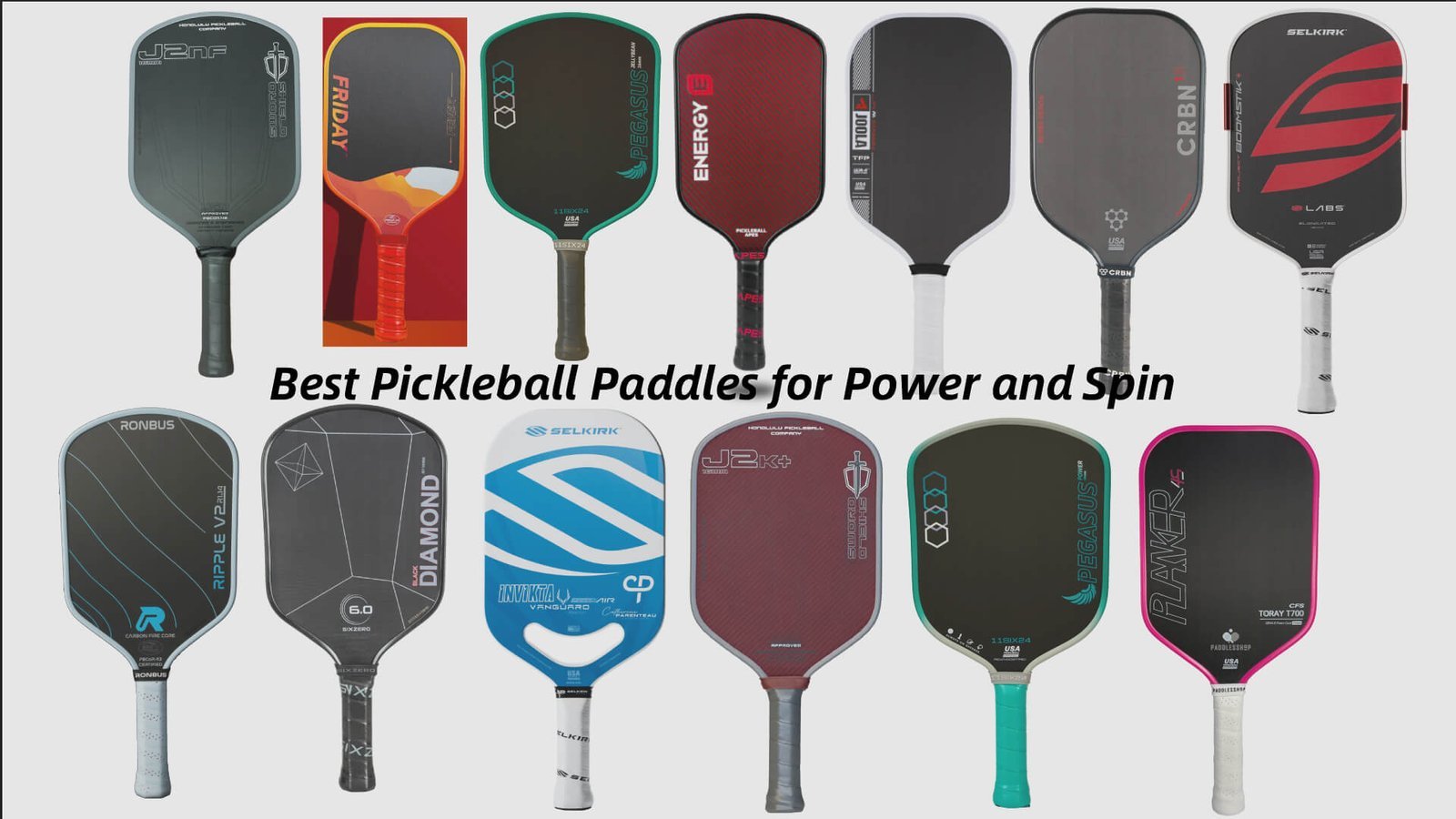
Best Pickleball Paddles for Power and Spin
I’ve lived through the “Gen 1” days of just trying to keep the ball in, to the current 2025 arms race of paddle technology. And in all that time, the number one question I get from fellow players is always a variation of the same thing: “What is the best pickleball paddle for power and spin?“
The problem is, these two attributes are often natural enemies. A paddle built for pure, raw power is often stiff, thick, and unforgiving, sending the ball flying but with all the finesse of a cannonball. A paddle built for insane spin is often softer, with more dwell time, allowing you to “work” the ball, but it can feel like you’re hitting with a pillow when you need to drive it down the line.
Players are searching for the best pickleball paddles for power and spin but they hit a wall. They assume they have to make a choice: “Am I a power player, or am I a control/spin player?” Worse, they believe that to get both, they have to shell out $250+ for the latest “pro-signature” model.
I’m writing this to tell you that, in 2025, this is no longer true.
The game has changed. What was premium, cutting-edge technology just two years ago—I’m talking about thermoformed unibody construction, raw carbon fiber faces, and advanced foam-injected cores (like Gen4 Core and Foam Core paddles)—has now become the standard. The manufacturing process has matured, and the prices have finally come down.
You can now get a championship-level best power and spin pickleball paddle for under $150, and even under $100. You just have to know exactly where to look.
I’ve compiled all that research into this guide. This isn’t just a list of paddles; it’s my personal, curated selection for players who, like me, refuse to compromise.
My 2025 Market Research
Before I get to my top picks, I want to show you how I found them. I analyzed multiple major pickleball retailers, looking at their “Best for Power” and “Best for Spin” categories.
My goal was to find the overlap. Which paddles are so good that retailers are confidently listing them in both categories?
This cross-reference is what I call the “Power-Spin Matrix.” It cuts through the marketing hype and reveals what’s actually working.
| Paddle Model | Listed Under “Power” | Listed Under “Spin” | Price Point | My Analysis |
| CRBN Power Series (1x, 2x, 3x) | Yes | Yes | Premium ($220+) | This was the most consistent overlap. The name says “Power,” but its raw carbon face is legendary for spin. This is a true “best of both worlds” paddle, which is why it commands a premium price. |
| JOOLA Scorpeus / Perseus | Yes | Yes | Premium ($200+) | Another top-tier pro paddle. The Perseus, in particular, is an offensive weapon that serious players rave about for its ability to combine brutal power with heavy topspin drives. |
| Honolulu J2NF / J2K+ | Yes | Yes | Mid-Range ($150-$175) | This was the breakthrough. I found this paddle listed as a top-tier power paddle in video reviews and also cited in player forums as having elite, 2300+ RPM spin rates. A pro-level paddle in the mid-range. |
| Selkirk Vanguard Power Air | Yes | (Often implied) | Mid-Range ($150 Sale) | While its name screams “Power,” the raw carbon face and aerodynamics of this paddle make it a spin machine. Finding it on sale puts it right in our target budget. |
| Six Zero Black Diamond | Yes | Yes | Mid-Range ($108 Sale) | SixZero has always been a “player’s brand.” The Black Diamond line is frequently mentioned by players for its incredible slice and cut-spin, while the core provides ample power for put-aways. |
This data confirms our thesis: finding a best pickleball paddle for spin and power is no longer a search for a mythical unicorn. They exist, and more importantly, they exist at price points that are accessible to everyday, serious players.
Now, let’s break down my personal recommendations based on your budget.
Best Pickleball Paddles for Power and Spin Under $100
This category would have been filled with fiberglass “beginner” paddles. In 2025, you can get Gen3 or Gen4-style technology for under $100. It’s a completely different world. If you’re a 3.0-4.0 player looking to upgrade without breaking the bank, this is where I would start.
Pickleball Apes Pro Line Energy

Specs:
- Core: Narrow-cell Honeycomb Poly Core
- Surface: DuPont™ Kevlar® x Toray T700 Carbonfiber
- Grip: Leather Performance Grip
- Specs: 17” H x 7” W
- Weight: 8.0 – 8.2oz
- Swing Weight: 120
- Grip Length: 6.25 in
- Grip Circumference: 4.25 in
- Thickness: 16.5 mm
- Paddle cover included
- USAP (+PBCoR .43) Approved
Price:$89.99 from brand website
It’s 2025, and the paddle market is arguably more flooded than ever. We’ve seen “Gen 3” power tech, crazy aperture designs, and price tags creeping frighteningly close to $300. Yet, here I am, still reaching for the Pickleball Apes Pro Line Energy.
When this paddle first dropped, it felt like an experiment—a 17-inch elongated beast with a Kevlar face that looked more like tactical gear than sports equipment. Now, looking back (and still playing with it), it’s clear this wasn’t just a trend. It was a shift.
After putting this paddle through absolute hell on the courts for the last prolonged period, here is my unfiltered, honest take on why this paddle is still relevant—and maybe even superior—in 2025.
The Kevlar “Plush” is Real
If you’re coming from the stiff, poppy carbon fiber paddles that dominated 2024, the first thing you’ll notice here is the sound. Or rather, the lack of it.
The Pro Line Energy doesn’t “crack” or “pop” like a pure thermoformed carbon paddle. It thuds. The Kevlar (mixed with carbon) creates this incredibly plush, almost muted sensation. In my hands, it feels like the ball stays on the face just a millisecond longer.
- Why I love it: It makes resets stupidly easy. When I’m in the transition zone and someone blasts a drive at my feet, the Kevlar absorbs that pace rather than rebounding it instantly. I can drop the ball into the kitchen with a soft touch that feels almost unearned.
- The trade-off: You lose some feedback. If you’re a player who needs to feel every vibration to know where you hit the ball, this might feel “dead” to you initially. To me? It feels controlled.
The Reach: A Cheat Code for Tennis Players
Let’s talk about the dimensions because they are the most polarizing part of this paddle. It’s 17 inches long with a massive 6.25-inch handle.
As someone with a two-handed backhand, this is non-negotiable for me now. Most “elongated” paddles today stop at a 5.5-inch handle, leaving my left hand hanging off the butt cap. The Pro Line Energy lets me fit both hands comfortably, which gives me the leverage to whip through backhand drives exactly like I did in my tennis days.
The reach at the net is also a legitimate advantage. I’ve dug out dinks that were well past my peripheral vision simply because the paddle extends further than my brain expects. It feels like playing with a cheat code on defense.
The “Slow Hands” Reality Check
I won’t sugarcoat this: This paddle is slow.
With that 17-inch length and the weight distributed toward the head (the “hammer” effect), the swing weight is high—consistently clocking in around 120-125 range. In 2025, where hand speed battles at the kitchen line are faster than ever, you will feel the drag.
- My experience: Late in a 3-hour session, my wrist feels it. If I get into a lightning-fast firefight at the net, I sometimes feel like I’m swinging a sledgehammer while my opponent is swinging a fly swatter.
- The fix: I’ve learned to shorten my backswing significantly. You don’t need to wind up with this paddle; the leverage provides the power. If you keep your paddle out in front, you’re fine. If you drop your hands, you’re dead.
Power: Plow Through vs. Pop
There’s a distinction I make between “pop” (how fast the ball leaves the face) and “power” (how hard the ball travels through the court).
The Pro Line Energy is not a “poppy” paddle. It doesn’t rocket the ball off the face on soft touches. However, it has immense plow-through power. Because of the swing weight and the elongated shape, when you drive the ball, it stays hit. My baseline drives have a heaviness to them that lighter paddles just can’t replicate. It doesn’t slap the ball; it crushes it.
Durability:
One of the big claims when Kevlar arrived was durability. Two years later? It holds up.
Raw carbon fiber faces tend to smooth out after 3-4 months of heavy play. My Pro Line Energy, however, has kept its grit remarkably well. The Kevlar fibers seem more resistant to smoothing than the standard peel-ply textures. While I definitely don’t get the same RPMs I did on day one, I’m not seeing the “bald spots” I see on my friends’ traditional carbon paddles.
Who is this for in 2025?
If you are a singles player or a tennis convert who loves to drive the ball and play a power game from the baseline, this is still top-tier. The leverage and reach are unmatched.
However, if you are a pure doubles specialist who lives and dies by lightning-fast hand battles at the kitchen line, this paddle might be too sluggish for you. (If that’s you, look at the Energy S—the shorter, faster sibling which I’ve also rotated in, but I always miss the reach of the original).
Final Thoughts
The Pickleball Apes Pro Line Energy isn’t for everyone. It demands you handle its weight and respect its unique, muted feel. But in a sea of copy-paste paddles, it remains distinct. It offers a specific set of advantages—reach, plush control, and heavy power—that I still haven’t found replicated perfectly elsewhere.
It’s not just a paddle; it’s a heavy-hitting weapon. And in 2025, it’s still the one I trust when I need to control the court.
Paddlesshop Planker 4S

Specs:
Skill Level: Intermediate to Advanced
Paddle Height: 16.33”
Paddle Width: 7.28”
Core Thickness: 15mm
Face: Toray T700 Carbon Fiber with Durable Grit Surface
Core: Gen4.5 Fusion Foam Core
Average Weight: 7.8 -7.9 oz
Grip Length: 5.31”
Grip Type: White Ultra-Comfort Grip
Grip Circumference: 4.18”
Price:$89.99(use code:xmas) from Paddlesshop
Let’s be real—when I first stumbled across the Planker 4S, my immediate thought was, “Who?” In a 2025 market dominated by the big names charging $200+, finding a sub-$100 paddle from a smaller shop feels like a gamble. But after spending a month on the courts with this thing, I have some very specific thoughts that you won’t find on a spec sheet.
First off, the “15mm” thickness is interesting. We’ve spent the last few years arguing between 14mm and 16mm, and this splits the difference in a way that leans heavily towards speed.
The Power is Not a Joke If you are looking for a soft, pillow-like reset paddle, stop reading. This isn’t it. The Planker 4S is a rocket launcher. I’ve played extensively with the Honolulu J2NF and the CRBN TruFoam series, and I can confidently say the Planker 4S has more raw power than both of them.
The ball explodes off the face. There’s a “carbon filter sheet” embedded in the middle of the core that acts almost like a springboard. When I’m driving from the baseline or looking for a put-away at the kitchen, that extra pop is addictive. It doesn’t feel like the plush foam-core paddles that have become trendy lately; it feels stiff, crisp, and violent.
The Trade-Off: The Soft Game Here is where I have to be honest. That same carbon sheet that gives it massive power makes the soft game… tricky. It is too poppy for me sometimes. If you have lazy hands or try to block a hard drive without softening your grip, the ball is going to pop up high.
Controlling dinks requires hyper-focus. I found myself having to shorten my backswing significantly compared to when I play with a standard Gen 3 control paddle. It’s not unplayable, but it’s definitely “hard to control” if you aren’t precise. It demands soft hands because the paddle itself won’t do the dampening for you.
Indoor vs. Outdoor: A Weird Discovery Here is something I haven’t seen anyone else mention: this paddle has a split personality depending on the ball.
-
Outdoor: With a 40 hole ball in cold weather, the paddle feels extremely stiff and the pop can be overwhelming.
-
Indoor: This is where the magic happened for me. When I took it inside (playing with indoor balls), the paddle felt incredible. The softer ball counters the stiffness of the paddle face, giving you that power without the jarring “ping.” I honestly have way more fun playing indoor games with it.
The Verdict
For the price, the Planker 4S is a sleeper hit for aggressive players. Just know what you’re signing up for: you’re trading effortless resets for knockout power. If you play a lot of indoor pickleball or you felt the Honolulu J2NF was just a little too soft for your finishing style, this is a hidden gem worth grabbing.
11SIX24 Pegasus (Jelly Bean)

Specs:
- USA Pickleball Approved
- 1 Year Warranty
- PBCoR Approved* Early paddles will not have the stamp but following ones will
- Surface: 11SIX24 CFC Surface – 3 Layers. 2 raw toray T700 Carbon Fiber and 1 fiberglass
- Foam reinforced walls
- Average Weight – 8.0-8.3oz
- Total Length – 15.82 Inches
- Width – 8.04 Inches
- Grip Circumference – 4.125 Inches
- Grip Length – 5.75 Inches
- Core Thickness – 16mm
- Swing weight – 109-111
- Twist weight – 7.2
- Unique serial number
- Free paddle cover
It’s late 2025, and if you walk around any local court, you’re going to see a sea of “Gen 3” and “Gen 4” power paddles—equipment designed to turn every drive into a missile. But I’m still reaching for the 11SIX24 Pegasus Jelly Bean.
I’ve put serious hours into this paddle, and honestly, in a market obsessed with power, this thing feels like a necessary grounding wire. It’s not the newest tech anymore, but it holds a spot in my bag for a very specific reason: it bridges the gap between the “mushy” control paddles of the past and the “uncontrollable” power paddles of today.
Here is my real-world take on why the Pegasus Jelly Bean is still relevant this year.
The “Secret Sauce” is Still the Face
Most raw carbon paddles look and feel the same. You hit the ball, it feels dead (in a good way), and you move on. The Jelly Bean is different because of that CFC (Carbon-Fiberglass-Carbon) layout.
When I’m dinking at the kitchen line, I feel the plushness of the carbon fiber—it grabs the ball and lets me place it short. But when I speed up a ball or go for a counter, that inner fiberglass layer wakes up. It gives this little “kick” or springiness that pure carbon paddles like the Vatic Prism Flash just don’t have.
In 2025, where everyone is swinging faster, that extra pop is crucial. I don’t have to swing out of my shoes to get a ball past someone; the paddle does just enough of the work for me.
Shape and Handle: A Rare Combo
This is my favorite “under-the-radar” feature. The Pegasus is a widebody paddle (huge sweet spot, very stable), but it has a 5.75-inch handle.
Usually, if you want a widebody, you’re stuck with a short stubby handle. If you want a long handle, you have to buy a narrow elongated paddle. The Pegasus gives me the best of both worlds:
-
My two-handed backhand fits comfortably (and I don’t have small hands).
-
My blocking game is rock solid because the paddle is wide and twist-resistant.
If you are a player who frames the ball a lot when blocking drives, this shape is a lifesaver.
Performance Breakdown
-
The Soft Game (Dinks & Resets): This is a “Gen 1.5” construction—meaning it has foam edges but isn’t thermoformed (hot-molded). The result? It’s quiet and plush. I can reset a hard drive into the kitchen without the ball popping up 10 feet in the air. It absorbs pace incredibly well.
-
The Power Game: Don’t expect this to be a baseline cannon. When I’m serving, I have to generate my own mechanics. It’s not going to bail you out if you have a lazy swing. However, for hand battles, it’s elite. That fiberglass layer makes it fast and punchy when reflexes matter more than raw strength.
-
Spin: The grit is still top-tier. Even after months of play, I’m generating enough RPMs to dip drives at the feet of opponents. It hasn’t smoothed out as fast as some of my sprayed-on grit paddles.
Durability:
One worry with “hybrid” faces is delamination, but my Pegasus has held up. The white graphics get dirty—my “Jelly Bean” looks more like a “Dusty Bean” now—but a paddle eraser cleans it up. Structurally, the core hasn’t crushed, and the edge guard is solid. It’s a workhorse.
The Verdict
In 2025, you can spend $250+ on a paddle that hits the ball 5% harder. Or, you can pick up the Pegasus Jelly Bean.
It is not the most powerful paddle on the market. It is not the flashiest. But it is arguably the most balanced. It allows me to play a confident soft game without feeling toothless when the speed-ups start. If you are an intermediate player tired of popping balls up with thermoformed power paddles, or an advanced player who values placement over brute force, this is still one of the smartest buys you can make.
Friday Fever

Specs:
Triple Layer T700 Raw Carbon Fiber
Gen 3 Floating Core
Avg. Weight: 7.7oz ± 0.18 oz
Paddle Area: 16.5″x7.5″
Thickness: 16mm
Grip: 5.5″x4.25″
Swing Weight:115
Twist Weight:5.9
RPM:2035
Price: $89 from Friday
I’ll be honest—I bought the Friday Fever because I was tired of spending $250 on paddles that go dead in six months.
By now, we’ve all seen the hype. The “Gen 3” tech (thermoformed, foam edges, propulsion cores) that was revolutionary a year or two ago is now standard. But while the big brands are still charging a premium for it, the Friday Fever is sitting there at $99 (or less if you snag one of their endless “2-for-1” deals).
I’ve been bagging this paddle for the last few months, putting it through the wringer of league nights and rec play. Here is my unfiltered take on where the Fever stands in the 2025 pecking order.
When I first unwrapped the Fever, my immediate reaction was, “Is this thing empty?”
The weight on mine came in at a staggering 7.7 ounces. For an elongated paddle in 2025, that is absurdly light. Most of us are used to 8.0–8.3 oz static weights. When I took it to the court in its stock form, it felt fast—insanely fast—but it also felt unstable.
If you block a hard drive from a 4.5+ banger with a stock Fever, the paddle twists in your hand. It lacks “plow through.” The ball wins the collision, not the paddle.
My Verdict: Do not buy this paddle if you plan to play it and you are above a 3.5 level. You need to customize it.
Here is the unique perspective that most spec sheets miss: The Friday Fever is the best “platform paddle” on the market right now.
Because it starts so light (swing weight around 110-112), you have freedom that you don’t get with a Joola or a CRBN. If you add lead tape to those heavy paddles, you risk giving yourself tennis elbow. With the Fever, you must add weight, but you get to choose where.
My Setup:
- Lead Tape: I added 3 grams total at the 3 and 9 o’clock positions (the throat area) to fix the twist weight issues.
- Weighted Tape: I added another 3 grams at the top (12 o’clock) to drag the swing weight up to about 120.
- Grip: I immediately ripped off the stock grip. It has these weird ridges that feel cheap. I replaced it with a smooth comfort grip and an overgrip.
Once I did this? The paddle completely transformed. It went from a “tinny” toy to a weapon. Suddenly, I had the stability of a $200 paddle, but with the exact balance point I wanted, not what a factory decided for me.
The “Pop” vs. “Dwell” Debate
Now that we are deep into the Gen 3 era, we know that some of these paddles are “rocket launchers” that pop the ball up too high.
The Fever is surprisingly controlled for a thermoformed paddle. It feels softer than the competitors in the propulsion core space. When I’m dinking, I don’t feel like the ball is trampolining off the face uncontrollably. It has a plush feel that lets me absorb speed.
However, because of that softer face, you don’t get “free power” on drives. You have to generate your own head speed. That’s where my lead tape setup helped, but if you have slow mechanics, this paddle won’t magically fix your put-away power.
Durability and Quality Control
We have to talk about the price tag. It’s $99. You are paying for the tech, not the finish.
- The Paint: After two weeks of court play (no ground taps, just bag wear and ball contact), the paint on the edge graphics started chipping. It doesn’t affect play, but it looks beat up fast.
- The Grit: The spin is solid—I’m getting high 1900s RPMs—but the texture seems to smooth out faster than on my higher-end carbon paddles. It’s still usable, but it loses that “brand new sandpaper” bite after a month of heavy play.
- The Warranty: This is the kicker. Friday offers a “99-day happiness guarantee,” which essentially acts as their warranty. In 2025, when other brands are offering 6-month to 1-year warranties against core crushing and rattle, 99 days is short. If your core crushes on day 100, you’re out of luck.
Who Is This Actually For?
It is now late 2025. The market is flooded with good paddles.
Do not buy the Friday Fever if:
- You want a premium unboxing experience and flawless cosmetic finish.
- You never want to touch lead tape or mess with paddle weights.
- You rely on your paddle to generate 100% of your power.
You should absolutely buy the Friday Fever if:
- You are a “tinkerer.” You want a lightweight base that you can weight up to your exact specs.
- You destroy paddles. If you play 5 days a week and go through cores quickly, it is much less painful to replace a $99 Fever than a $280 pro paddle.
- You want Gen 3 performance (foam walls, thermoforming) but refuse to pay the “logo tax.”
The Verdict
The Friday Fever isn’t the “best” paddle in the world, but it might be the smartest purchase for the intermediate player in 2025. It requires a little bit of work (weighting and gripping) to unlock its potential, but once you do, it punches way above its weight class.
Just buy some electrical tape and tungsten weights when you order it. Trust me.
Best Pickleball Paddles for Power and Spin $100 -$199
This, in my experience, is the sweet spot. This is the price range where I tell 90% of my friends to shop. You are getting 99% of the performance of a $250+ paddle. The materials are identical, and the performance is, in many cases, indistinguishable. This is my favorite category.
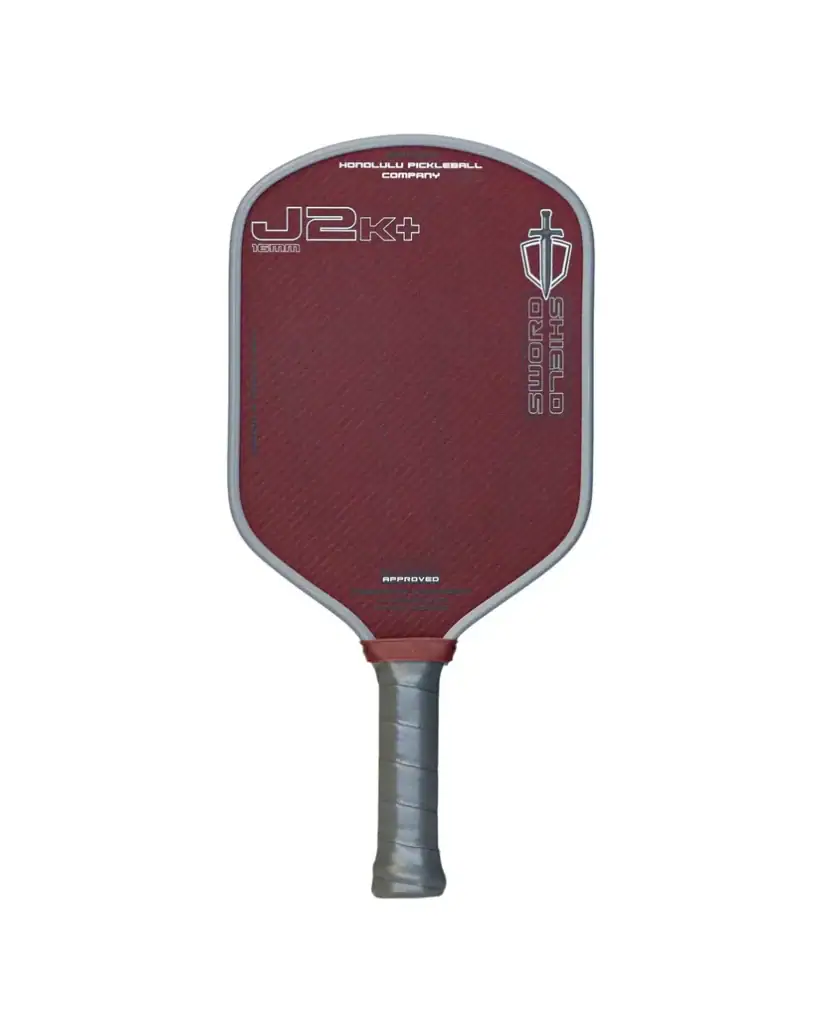
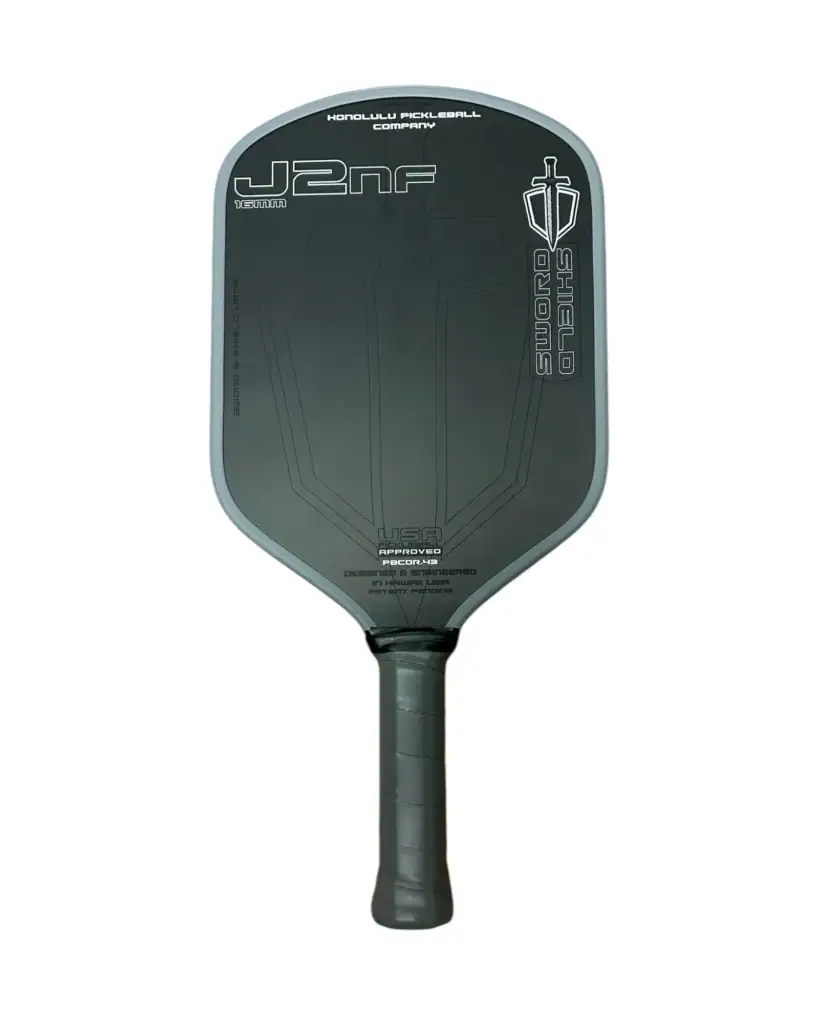
J2K+ vs. J2NF — Key Differences
Both paddles share the same Aero Hybrid Plus shape, 16mm core thickness, middleweight range, 5.5″–6″ grip length options, USA Pickleball Approval, and use Connected Reflex Technology™ for faster hands, power, spin, control, and a large sweet spot.
Here’s what makes them different:
🔹 Surface Material
-
J2K+: 100% Aramid Fiber — DuPont™ Kevlar®
-
J2NF: CFC Carbon Fiber
🔹 Core Construction
-
J2K+: Thermocompression Forming with a floating premium PP core + perimeter dual foam + carbon fiber ring
-
J2NF: Gen. 4.5 Multi-Density Floating Core — EPP core interlaced with EVA perimeter foam
🔹 Warranty
-
J2K+: 3-Month Limited Warranty
-
J2NF: 1-Year Warranty
🔹 Weight & Performance Numbers
| Spec | J2K+ | J2NF |
|---|---|---|
| Average Weight | 8.0–8.4 oz | 8.0–8.3 oz |
| Swing Weight | 113–118 | 110–114 |
| Twist Weight | 7.1–7.3 | 7.0 |
🔹 Grip Length Options
-
J2K+: 5.5″
-
J2NF: 5.5″ (Original J2) or 6.0″ (Extended J2)
🔹 Included Accessories
-
J2K+: Comes with a premium waterproof cover with hanging clip ($25 value)
-
J2NF: No cover included by default
Here is how they actually feel when you’re stuck in a fast-hands battle at the kitchen line.
The J2NF:
The first thing I noticed after about three sessions with the J2NF is the sound. It has this distinct, crisp “crack” that you don’t get from pure carbon paddles. That’s the CFC surface (Carbon-Fiberglass-Carbon) doing its job.
Unlike the raw carbon paddles that feel like the ball is “sinking” into a pillow, the J2NF feels like a trampoline. The ball gets in and gets out fast.
-
The “Oh, wow” moment: It’s the counters. When someone tries to speed up a ball at my chest, I barely have to swing. A compact block with the J2NF sends the ball back with enough pace to catch them off guard. It does the work for you.
-
The Trade-off: It’s not as plush as the J2K+. If you have “stone hands,” you might pop a few dinks up initially because the face is livelier. But once I dialed in my soft grip, the “Notched Foam” core gave me enough feedback to feel connected to the ball, rather than that numb, disconnected feeling you get from some power paddles.
-
Quality Control Note: Just a heads-up—my unit arrived with a slightly uneven edge guard glue job. It doesn’t affect play, but for a premium paddle, I expected perfection there.
The J2K+: Still the King of “Plush”
I still keep the J2K+ in my bag, but its role has changed. I pull this out on days when I’m feeling off, or when I’m playing against bangers who drive everything.
-
The Kevlar Difference: The Kevlar/Aramid face is noticeably “grabbier” than the J2NF. You can feel the texture biting into the ball on slices. It’s significantly softer and more muted.
-
The “Break-in” Scare: Be warned—around the 3-week mark (approx. 15 hours of play), my J2K+ sound changed drastically. It went from a thud to a louder, almost wooden-sounding clack. I panicked thinking the core was crushed, but it wasn’t—it was just the paddle “opening up.” It got poppier, but just know that the sound will change.
My Verdict:
If you want to play a patient, slow game and frustrate opponents with resets, save the money and get the J2K+. It’s the safe, reliable shield.
But if you want to finish points? Get the J2NF. It is currently the best blend of hand speed and “put-away” pop I’ve found this year.
Selkirk Vanguard Power Air

Specs:
Midweight Range: 7.7 – 8.1 oz.
Grip Circumference: 4 1/4″
Grip: Selkirk Geo Grip
Handle Length: 5 1/4″
Paddle Length: 16 1/2″
Paddle Width: 7.375″
Face: Hybrid Blend of Fiberglass and Carbon Fiber
Core material: Polymer Honeycomb
Core Thickness: 13mm
Edge Guard: Edgeless DuraEdge
Price: $150 from Selkirk
Look, I’ve hit with the Gen 3 thermoformed stuff, I’ve tried the “quiet” paddles that are trending because of the noise ordinances, and I’ve messed around with those Kevlar-weave hybrids everyone at the courts is obsessing over this year. But in 2025, I’ll still use it as a backup.
If you’re looking for a pillow to softly reset balls into the kitchen, this isn’t that.
The “Pop” Is Still King
Three years after its debut, the pop off this face is still startling. Most modern paddles in 2025 try to dampen vibration so much that you lose connection with the ball. The Power Air does the opposite. When I drive a third shot, the feedback is instant and crisp. It’s stiff, yes—sometimes it feels like hitting with a stiff wooden plank if you miss the center—but that stiffness translates to immediate ball speed.
Last weekend, I got into a firefight at the kitchen line against a guy using one of those new “soft-dwell” paddles. He was trying to push and steer the ball; I was just flicking my wrist. The aerodynamics of that open throat (the “Air Dynamic Throat”) aren’t just marketing fluff. I swear, in rapid-fire hands battles, this thing moves through the air faster than anything else I own. I won that exchange simply because my paddle got to the ball a split-second faster.
Spin: The “Sandpaper” Reality
Let’s be real about the ProSpin+ texture. When I first unboxed this, it felt like 80-grit sandpaper. I could literally see the plastic from the ball dusting off onto the face. Now, after playing heavily with it for about six months, that aggressive grit has smoothed out.
However, don’t let the keyboard warriors scare you. Even worn down, the spin is elite. It just changes. It goes from “grabbing” the ball to “brushing” it. I can still shape my drives and hit that nasty dipping topspin roll, but I have to be more active with my wrist now than when it was fresh out of the wrapper.
The “Love/Hate” Relationship Here is my honest truth: This paddle has zero forgiveness. It is selfish. If I’m lazy with my footwork or I try to block a body-bag shot with a loose grip, the ball dies or pops up. It demands that I play well.
But when I’m dialed in? It feels unfair. The edgeless design means I’m not clipping the tape on ground strokes, and the sweet spot, while smaller than the newer “wide-body” trends, is lethal when you find it.
Who is this for?
If you are a tennis convert who loves to rip drives and speed up balls at the net, this is still your holy grail. It’s for the player who wants to dictate the point, not just keep the ball in play.
My Verdict:
It’s not the “newest” tech on the block anymore, but it’s like driving a vintage muscle car in a world of EVs. It’s loud, it’s fast, and it’s incredibly fun if you know how to handle it. Just be ready to apologize to your opponents for the body shots—this paddle doesn’t do “gentle.”
11SIX24 Pegasus Power

Specs:
USAP PBCoR 43 Certified
Power level: Power
Surface CFC
Core: Floating Polypropylene Honeycomb
Surround: Closed Cell EVA Foam
Edge: Reinforced for stability and durability
Average Weight – 8.0-8.3oz
Total Length – 15.8 Inches
Width – 8.12 Inches
Grip Circumference – 4.125 Inches
Grip Length – 5.5 Inches
Swing weight – 109-112
Twist weight – 7.5
Unique serial number
Free paddle cover
Price:$127.99(use code:paddlesshop save$10) from 11SIX24
Look, I’ll be honest—usually, when I grab a wide-body paddle, I’m expecting a “shield.” You know, something stable and plush that blocks everything but hits like a wet noodle when I try to put a ball away. But I’ve been bagging the Pegasus Power for a while now in 2025, and this thing is a total anomaly. It feels like a cheat code for hand speed, yet it still hits like a truck.
The “Pop” Factor
If you’ve been around the courts this year, you know the “Gen 3” tech with the foam-encased core is standard now, but 11SIX24 tuned this one differently. The first time I took it to the kitchen line, I almost sailed a few resets long because the ball just explodes off the face. It makes a loud, distinct “gunshot” sound that turns heads—my drilling partner actually stopped to ask if I’d broken the paddle. It’s not broken; it’s just loud and aggressive.
Hand Speed & The “Shield” Myth
Here’s where it gets fun. Because it’s a standard/wide shape (about 15.8 inches long) with a swing weight that feels incredibly low (around 109-112 range), my hand speed in firefights has been insane. I’m winning hands battles I usually lose with elongated paddles. But unlike other lightweight paddles that twist in your hand if you miss the center, this thing is rock solid. The twist weight is high enough that even when I shank a block, the paddle doesn’t wobble, and the ball still somehow dribbles over.
Spin and Touch
The surface is what they call “CFC”—a mix of carbon fiber and fiberglass. In plain English: it grabs the ball hard. I’m getting tons of shape on my drives and rolls. However, I have to warn you about the touch game. This isn’t a “pillow” paddle. Dinking requires very soft hands because the face is so hot. It took me about two weeks to dial in my drops so they wouldn’t pop up too high. But once you adjust, that extra pop is perfect for flicking attacks out of the air.
The Verdict
If you are a banger who is tired of heavy, sluggish paddles, or a control player who feels like you can’t generate enough put-away power, this is the middle ground. It’s for the player who wants to be lightning-fast at the net but still wants to crush an overhead. Just be ready to soften your grip on those resets, or you’ll be sending free souvenirs to the back fence.
Six Zero Black Diamond Power

Specs:
Registered Approval Body:USA Pickleball
Face Material:Proprietary Japanese Raw Composite Material
Length:16.3” // 413mm
Width:7.5”to 7.7” // 192mm to 196mm
Core Thickness:0.63”
Grip Length:5.5”// 140mm
Grip Circumference:4.125-4.25” // 105-108mm
Average Weight:8.1oz +/- 0.2oz // 230gm +/- 10gm
Swing Weight:114
Twist Weight:6.8
Price:$108 from Sixzero
If you walk onto any court in 2025, you are almost guaranteed to see a sea of Double Black Diamonds (the control version). It became the gold standard for a reason. But for the last few months, I’ve been reaching past my control paddles and grabbing the Black Diamond Power—the one with the silver lettering—and frankly, I think a lot of you are sleeping on this thing.
We are deep into the era of “Gen 3” and “Gen 4” tech, where companies are stuffing titanium and kevlar into paddles, but the Black Diamond Power remains relevant because it does something very few modern paddles do: it uses a fiberglass composite face on a thermoformed body.
In a world obsessed with raw carbon fiber, “fiberglass” usually sounds like a dirty word—something you’d find on a cheap beginner paddle from Amazon. But Six Zero cooked this thing differently. This isn’t your starter paddle’s fiberglass.
The “Pop” is Addictive (and Dangerous)
The first time I hit a drive with this, I actually laughed. The ball explodes off the face. We talk a lot about “plow through” and “pop” in this blog, but the Black Diamond is different. It feels crisp—almost stiff—but the energy transfer is instantaneous.
With my carbon paddles, I sometimes feel like I have to “carry” the ball. With the Black Diamond Power, the ball is gone before I even finish my follow-through. In hand battles at the kitchen line, this is a cheat code. If you are fast enough to get your paddle behind the ball, it’s coming back at your opponent faster than they sent it. I’ve won countless firefights just because the paddle did the work for me.
The Spin
Here is the biggest surprise: This thing rips. There is a misconception that you need raw carbon fiber for top-tier spin. I’m telling you, the grit on this composite face is aggressive. I’m seeing my drives dip just as hard as they do with my dedicated spin paddles. The texture has held up well over time, too, which was my main worry with a composite face.
The Reality Check: It Will Humble You
I have to be real with you—this paddle demands “soft hands.” If you are tense, or if you have “stone hands,” you are going to pop the ball up. Transitioning back to this paddle usually takes me about a game and a half to dial in. My resets initially float too high, and my thirds can sail long if I get too excited. It is not a “plush” ride. It’s a sports car with stiff suspension. You feel everything, including your mistakes.
If you are the type of player who loves to bang from the baseline and crash the net, this paddle is a dream. But if your game relies on ultra-delicate drops and resets, you’re going to have to work harder than you would with the Double Black Diamond.
Final Verdict
Three years after its debut, the Six Zero Black Diamond Power is still one of the hardest-hitting 16mm paddles you can buy. It hasn’t been made obsolete because nobody else has really replicated this specific feel.
If you feel like your game has plateaued and you need more “put-away” power—or if you’re just tired of swinging out of your shoes to get the ball deep—give this one a shot. Just be prepared to spend a few sessions taming the beast.
Best Pickleball Paddles for Power and Spin Over $200+
Let’s say you just won the lottery, or you’re a 5.0 player where a 1% difference matters. What are you buying? This is the “premium” tier. These paddles feature the absolute latest in material R&D and are the best pickleball paddles for spin and power when budget is irrelevant.
Ronbus Ripple V2 R1.14

Specs:
Paddle Length: 16.5”
Face Width: 7.5”
Grip Length: 5.5”
Grip Circumference: 4.125” Octagon
Weight: 8.2oz, +/- 0.2oz
Swingweight: 124
Twistweight: 5.89
Paddle Surface: Raw Toray T700 Carbon Fiber Textured
Paddle Shape: Elongated
Core Material: Carbon Fiber Grid Infused EVA
Core Thickness: 14mm
Edge Guard: Yes
6 month warranty against manufacturing defects
Price: $280 From Ronbus
If you were around during the “Paddle Gate” chaos of 2024, you remember the Ronbus Ripple Beta. It was legendary—mostly because it was practically illegal. It hit like a truck, spun like a buzzsaw, and was promptly sent back to the drawing board.
Fast forward to now, late 2025. The dust has settled, and the Ronbus Ripple V2 R1.14 is officially here. I’ve been drilling and playing rec games with this thing for weeks to answer one question: Did they neuter it to make it legal, or is the magic still there?
Let’s cut the marketing speak. Here is how the R1.14 actually plays.
The “Grid” Core: Why It Feels Weird (In a Good Way)
First off, forget everything you know about polymer honeycomb cores. This paddle doesn’t have one.
Ronbus uses what they call a “FIRE” core, which is basically a carbon fiber lattice infused with foam. If you could x-ray this thing, it looks like a grid of carbon strips running through EVA foam.
What does that mean for your hands?
It feels dense. When you hit a generic honeycomb paddle, you get that hollow pop sound. The Ripple V2 produces a lower-pitched thud. It feels plush, almost soft, but the ball explodes off the face. It’s a confusing sensation at first—soft feel, massive exit velocity.
The Break-In Period is Real
Do not judge this paddle in the first 20 minutes. Out of the box, mine felt a bit stiff, almost dead. It took me about three sessions (roughly 6-8 hours of play) for the foam to “wake up.” Once it did, the sweet spot opened up, and that “trampoline” effect kicked in. Be patient with it.
Power: It’s a Cannon
Let’s be honest, you’re looking at this paddle because you want power.
The R1.14 is absolutely a “rocket launcher.” In 2025, with the strict 0.43 PBCOR deflection limits, this is likely as close to the legal limit as you can get.
- Drives: Effortless. I found myself shortening my backswing because I didn’t need to swing hard to get depth.
- Put-aways: If you catch a high ball, it’s over. The pop is elite.
- Hand Battles: This is where you have to be careful. The ball comes off so hot that if you have “twitchy” hands at the kitchen line, you’re going to send balls sailing long. You have to trust the paddle to do the work.
The R1 Shape:
We need to talk about the specs, because the R1 shape (elongated) is not for everyone.
- Swing Weight (~124-125): This is high. If you are coming from a light paddle, this will feel like a sledgehammer. It drags a bit at the net. If you don’t have strong wrists or solid mechanics, you will feel slow in transition.
- Twist Weight (~5.8-5.9): This is on the lower side. Because the paddle is long and powerful, the sweet spot is narrower side-to-side.
- The Reality: If you hit the center, it feels amazing. If you mishit near the edge, the paddle wants to twist in your hand, and the ball dies. This is the trade-off for that massive power. It is not a forgiveness paddle.
Spin & Control
The spin is top-tier. It’s not the absolute highest number I’ve ever seen on a spec sheet, but on the court, the ball dips. The surface grit combined with that plush dwell time lets you shape the ball really well on rolls and heavy topspin drives.
The Soft Game (Dinking & Resets)
This was the biggest surprise. Usually, power paddles are a nightmare to dink with. But because of that foam/carbon grid construction, the R1.14 actually absorbs energy well on soft shots.
- Drops: Felt buttery smooth once I adjusted to the weight.
- Resets: This is the danger zone. If you just block the ball, it’s great. If you punch at it aggressively, you’ll pop it up. The paddle is so lively that you have to have “soft hands” to keep the ball in the kitchen.
Durability: The $280 Question
This paddle costs $280 (a little less if you hunt down a code). That is steep. The concern with any foam-based paddle is that as it breaks in, it can get too hot. After a month of heavy play, mine is hitting harder than day one. There is a risk that in 6 months, it might become a literal trampoline. But so far, no core crushing or dead spots, which is better than a lot of the “Gen 3” disasters we saw last year.
Final Verdict:
This is not for the beginner who just wants to get the ball over the net. This is not for the defensive player who relies on lightning-fast hands to block drives. The swing weight will tire you out. If You are an offensive player who creates offense from the baseline and mid-court, It’s pretty good. Or you miss the power of the “banned” paddles from 2024 but want to play legal tournaments.
Selkirk Boomstik

Specs:
Elongated
Skill level: Intermediate to Advanced
Average weight: 8.0 – 8.3 0z
Grip length: 5.8”
Grip circumference: 4.25”
Average swing weight: 118 (may vary +/- 2 pts)
Average twist weight: 7.2 (may vary +/- 0.3 pts)
Paddle height: 16.5”
Paddle width: 7.45”
Face material: Multistrata T700 Carbon (3 layers)
Core thickness: 16mm
Core material: BoomCore
Sweet spot size: 9
Warranty: Limited Lifetime Warranty
Ratings:
Power: 10
Spin: 10
Control: 8
Sweet Spot: 9
Price:$333 from Selkirk
It’s been about three months since I dropped $333 on this thing, and honestly, the name “Boomstik” isn’t just marketing fluff—this paddle screams. Literally. It makes a sound like a gunshot when you really connect. If you are trying to be quiet at your local courts, this isn’t the paddle for you.
The Power & Pop
Let’s get straight to why you’re looking at this: the power. This is easily one of the hardest-hitting paddles I’ve played this year, right up there with the Gearbox GX2 and the Joola Mod TA. But unlike the “trampoline” feel of some of those Gen 3 paddles that eventually core-crush, the Boomstik feels solid. It uses this dual-density foam core with an EVA ring that makes the ball rocket off the face.
My drives have this heavy, penetrating pace that I used to struggle to generate with my old honeycomb cores. The ball just goes. I’ve found that I can shorten my backswing on counters and still win hand battles because the paddle does 90% of the work for me.
The “Stiffness” Factor (The Adjustment Period)
Here is the reality check: if you have “stone hands,” this paddle will expose you. It is incredibly stiff. The feedback is immediate and harsh. When I first started dinking with it, I was popping balls up left and right because the pop off the face is so high. You have to significantly soften your grip pressure to reset the ball into the kitchen.
It took me about two weeks to dial in my drops. You can’t “push” your drops with this; you have to let the paddle absorb the pace, which is tricky because it wants to rebound everything fast. But once you find the rhythm, the stiffness actually helps you place the ball accurately because the face doesn’t deform or mush out.
Those Weird Copper Weights (MOI System)
You’ve probably seen the shiny copper things on the sides. Selkirk calls it the “MOI Tuning System,” which is a fancy way of saying they permanently stuck 15 grams of weight to the perimeter.
-
The Good: The twist weight is absurd. The sweet spot feels massive, especially on the widebody shape. Even when I shank a block near the edge, the paddle doesn’t twist in my hand, and the ball still goes over the net.
-
The Bad: You can’t take them off without ruining the edge guard. I usually like to customize my own lead tape, but I’m stuck with this stock setup. Fortunately, the swing weight (around 118 for the elongated) feels manageable, but if you like a featherlight paddle, this will feel like a sledgehammer.
Spin & Durability
It’s November now(The first time I wrote this article), and usually, by month three, my spray-on grit has worn smooth in the sweet spot. Surprisingly, the “Infinigrit” on this is actually holding up. It’s not raw carbon fiber, but it feels like sandpaper that refuses to quit. I’m still getting aggressive dip on my topspin drives. Also, unlike my friends whose Gen 3 paddles have gone “soft” or crunching in the middle, this foam core feels exactly the same as day one.
The Verdict
Is it worth $333? If you are a 3.5 player just looking for more power, save your money and buy an SLK Era or a Vatic. You won’t be able to control this.
But if you are a 4.5+ banger who thrives on speed-ups and fast hands, or if you are tired of replacing core-crushed paddles every two months, this is a weapon. Just be prepared to apologize to your opponents for the noise.
Pros:
-
Elite-tier power without the “mushy” feeling.
-
Massive sweet spot (stability is off the charts).
-
Durability seems legit so far (no core crushing).
Cons:
-
Loud. Like, really loud.
-
Unforgiving on soft resets if your mechanics aren’t clean.
-
Edge guard can peel near the weights if you scrape the ground too much.
CRBN 1X 16mm Power Paddle

Specs:
Average Weight: 8.0oz
Weight Range: 7.8 – 8.1oz
Grip Circumference: 4 1/4″ (Medium) Actual grip sizes may vary up to 1/8″.
Grip Style: Perforated Comfort Grip
Grip Manufacturer: CRBN Pickleball
Handle Length: 5.5″
Paddle Length: 16.5″
Paddle Width: 7.25″
Paddle Face: Raw T700 Carbon Fiber
Core Material: Polypropylene Honeycomb (foam injected edges)
Core Thickness: 14mm (0.55″) or 16mm (0.63″)
Edge Guard: 1/4″ overlapping paddle face
Price: $229.99 from CRBN
I know it’s 2025. We’ve got all these new “Gen 4” foam-core paddles and fancy tech hitting the market every other week (including CRBN’s own TruFoam stuff). But amidst all the paddles and the $280+ price tags, I still can’t forget CRBN 1x 16mm Paddle.
I’ve been bagging this paddle for a while now, and if you’re looking for a no-nonsense weapon that balances modern power with that raw, gritty feel we all fell in love with, you need to hear this.
The Feel: Crisp, Not Muted
The biggest difference I notice between the 1x and the newer 2025 foam paddles is the feedback. A lot of the new tech feels “muted”—like hitting a marshmallows. The 1x is crisp. When I hit a reset or a dink, I feel exactly where the ball is on the face. It talks to you.
If you shank it, you know it immediately. But when you find the center? It’s addictive. The unibody construction (where the carbon runs all the way down through the handle) makes it feel like one solid extension of your arm. There’s no wobble, no cheap vibration—just solid, stable contact.
Power & Pop:
They call it the “Power Series” for a reason. Even as a 16mm paddle (which is usually the control thickness), this thing has serious pop.
-
The Drives: The ball jumps off the face. I can hit aggressive third-shot drives that dip right at my opponent’s feet without swinging out of my shoes.
-
The Put-Aways: In hand battles at the kitchen, if someone leaves a ball high, it’s over. The elongated shape gives you that extra leverage and “plow through” to just crush overheads.
Warning: It is “launchy.” If you’re coming from a traditional soft control paddle, your first few dinks will pop up. I had to soften my hands and shorten my backswing at the kitchen line. But once you dial it in, that extra pop is a lifesaver when you’re pulled out wide and need to get the ball back over deep.
Spin: Ripping the Cover Off
This is my favorite part. The spin on the 1x is still top-tier, even by 2025 standards. We’re talking 1700+ RPMs easy. The grit on the Toray T700 carbon surface grabs the ball hard. I love hitting that rolling topspin dink or the dipping passing shot. You can visibly see the ball shape in the air. If you’re a player who likes to shape the ball or hit aggressive cuts, this paddle is a dream.
The Reality Check (Cons)
It’s not perfect. Here’s what you need to know before you buy:
-
It’s Head Heavy: Because it’s elongated (16.5 inches), the weight sits further up the paddle. If you have “slow hands” or weak wrists, you might feel it dragging during fast fire-fights at the net. I personally added a little lead tape to the throat to balance it out, but out of the box, it swings heavy.
-
The Sweet Spot: It’s good, but not “cheat code” massive like some of the wide-body standard shapes (like the 2x). You have to watch your contact point.
-
Price: Even in 2025, it sits around that $230 mark. It’s an investment, but considering the durability (I haven’t had any issues with delamination or the edge guard coming loose), it holds its value better than the cheap knockoffs flooding the courts.
Final Verdict
If you are an intermediate to advanced player who wants to play an aggressive game—drives, speed-ups, and heavy spin—the CRBN 1x 16mm is still one of the best setups out there.
It doesn’t try to be a “soft” pillow paddle. It’s a weapon. It demands you have decent mechanics, but it rewards you with power and precision that stands up to anything released this year. If you want that two-handed backhand reach and a paddle that feels like a tank, this is the one.
JOOLA Ben Johns Perseus Pro IV 14mm

Specs:
Core Options: 14mm (Power)
Length: 41.91 cm
Width: 19.05 cm
Handle Length: 13.97 cm
Grip Circumference: 10.47 cm
Weight: 221g (14mm)
Price: $279.95 from Joola
I’ll be honest—after the rollercoaster that was the “Gen 3” ban and the stiffness of the 3S, I was skeptical when I picked up the Perseus Pro IV. But after grinding out open play sessions and a few tournament weekends with the 14mm version this year, my tune has changed completely.
If you found the previous Perseus models a bit “clunky” or head-heavy, the first thing you’ll notice here is the hand speed. JOOLA finally fixed the swing weight. It feels significantly faster at the kitchen line than the 3S ever did. When I get into those rapid-fire hands battles, I don’t feel like I’m dragging an anchor anymore; the paddle just snaps into place.
The Feel: “Crisp” is an Understatement
The 14mm core has always been about pop, but the Pro IV introduces this new “TechFlex Power” (TFP) thing in the throat. Marketing jargon aside, here is what it actually feels like: stability without the harshness.
When I drive the ball, it screams. The exit velocity is nasty. But unlike the older models where a mishit felt like a vibration shock to the elbow, this feels dampened in a good way. It’s crisp, direct, and you know exactly where the ball is going. The “Propulsion Core” still gives that trampoline-like catapult effect, but it feels tamed now—legal, controlled, but still aggressive.
Dinking and Resets
This is usually the weakness of a 14mm power paddle, but I’m finding my resets are surprisingly consistent. The sweet spot feels slightly expanded, probably due to that foam injection in the throat. Don’t get me wrong—it’s still a stiff paddle. If you have “stone hands,” this won’t save you like a 16mm control paddle would. But if you have soft hands, you can carve the ball and manipulate spin way better than I expected.
The Handle Upgrade
Finally, can we talk about the grip? The blocky, thick handles of 2024 are gone. The Pro IV handle feels slimmer and more oval-ish in my hand. It’s easier to roll my wrist for those topspin flicks without feeling like I’m holding a 2×4.
My Verdict
Is it worth the $280 price tag? If you are an aggressive player who likes to dictate points with speed and drives, absolutely. It’s basically the “Mod” paddle we all wanted, but actually legal for tournament play. It’s not a beginner’s paddle—it demands you hit the center—but when you do, the ball feels heavy and fast. It’s the best “Ben Johns” paddle I’ve swung to date, purely because it doesn’t feel like a compromise anymore.
How to Choose Your Paddle
Okay, I’ve given you my top picks. But how do you choose the one that’s right for you? A paddle is a personal choice. Here is the 3-step process I use to help my friends find their perfect match.
Step 1: Choose Your Core Thickness (The “Feel”)
This is the most important decision. It dictates the paddle’s feel and power profile.
-
16mm (Thick Core): This is the “control” standard. A thicker core absorbs more energy, leading to a plusher, softer feel. It has a longer “dwell time” (the time the ball is on the paddle), which is fantastic for generating spin. It’s more forgiving and stable.
-
You should choose 16mm if: You are a “control” player who wants to add power, or if you value finesse and shot-shaping above all.
-
-
13mm-14mm (Thin Core): This is the “power” standard. A thinner core is stiffer and “poppier.” The ball comes off the face faster. This is fantastic for speed-ups, volleys, and powerful drives. Modern raw carbon faces now allow these thin paddles to also generate massive spin.
-
You should choose 13mm/14mm if: You are an aggressive player who wants to overwhelm opponents with speed and power.
-
Step 2: Choose Your Power Profile
This is a more advanced concept, but it’s critical. I mentioned this earlier.
-
Linear Power: What you put in is what you get. These paddles are predictable. They have a very consistent response across the entire swing speed. This, in my opinion, is better for most players as it builds confidence and reduces unforced errors.
-
Logarithmic Power (or “Poppy”): These paddles have an extra “gear.” They are very hot and reactive. When you swing hard, the power output jumps exponentially. This is incredible for offense but can be harder to control on dinks, drops, and resets.
Step 3: Choose Your Shape (Elongated vs. Hybrid)
-
Elongated: These paddles (like the JOOLA Perseus or Selkirk Power Air) are longer (16.5 inches). This gives you more reach at the net, more leverage for serves, and a higher sweet spot. The trade-off is a slightly smaller sweet spot width and less maneuverability (slower “fast hands” at the net).
-
Hybrid/Standard: These paddles (like the Honolulu J2NF or CRBN 2x) are wider. This creates a massive, forgiving sweet spot and makes them much faster and more maneuverable at the kitchen line. The trade-off is less reach.
My personal advice? Most doubles players are best served by a 16mm, Linear-Power, Hybrid-Shape paddle. This combination offers the best blend of spin, control, and forgiving power.
14 mm have more pop and your hands will feel faster. 16 mm have more control and stability … assuming it’s the exact same model … For example:JOOLA Perseus Pro IV 14mm RPM 987.7; 16mm RPM 967.4.
With a 16 mm, I feel more forgiveness, better reset game, and more consistent control on my speed-ups.
There’s also debate around “power” definitions: some say 16 mm gives more full-stroke power (because of higher swing weight), while 14 mm gives more “pop” (quick rebound) on shorter shots.
If power + pop (quick drives, smooshing volleys, aggressive counters) is a big part of your game and you’re confident with your technique, 14 mm often feels more responsive and energetic to me.
But if I’m playing more touch shots — dinks, drops, resets — and I want spin paired with control, 16 mm gives me a more forgiving “cushion” under my shots, which helps me manipulate spin without losing placement.
It gives you more power, but not necessarily more spin. Power comes from mass (weight) + swing speed. A heavier paddle has more mass, so it provides more “plow-through” and stability. Spin comes from swing speed (brushing the ball) and friction (the paddle face). A paddle that is too heavy might slow down your swing speed, thus reducing your spin. The sweet spot is a mid-weight paddle (7.9 – 8.3 oz) with a raw carbon face.
This is critical. If you have tennis elbow, stay away from stiff, 13mm “power” paddles. You need a paddle that absorbs vibration. My top pick here would be a 16mm foam-injected paddle. The foam dampens vibration significantly. The CRBN Power Series 16mm is an excellent (though pricey) choice. For a more budget-friendly option, look for any 16mm paddle known for a “plush” or “soft” feel, as this will be much easier on your arm.
No. While they may look identical, the foam core density is different. I have cut open “fake” Gen 4 or Foam paddles and found the foam was soft and inconsistent, leading to dead spots after four weeks of play. The best power and spin pickleball paddle requires high-quality resin, which cheap knockoffs skip. Stick to reputable brands like CRBN or Joola that offer warranties.
Yes. If you play in humid regions (like Southeast Asia or Florida), raw carbon fiber can lose friction when wet. I recommend carrying a “carbon eraser” block in your bag. Cleaning the fibers between games restores the grit and keeps it the best pickleball paddles for spin and power throughout the match.
Conclusion
I’ve been on the same journey as you: searching for the single paddle that lets me hit a blistering drive and a dipping, unreturnable topspin drop.
For years, I had to compromise. In 2025, I no longer do.
You don’t need to spend $250 to get a competitive, pro-level weapon. The technology has finally trickled down. My research and personal experience show that the market is flooded with high-performing, durable paddles that excel in both categories. In this review of mine, due to space limitations, only a part of the paddles are listed. Like Vatic Pro, Volair, PROXR, Bread & Butter also have decent POWER&SPIN Paddles.
If you’re a 3.0-4.5 player and want the absolute best value for your money, my #1 recommendation is the Honolulu J2NF. It’s the paddle that truly delivers on the promise of both power and spin without the premium price tag. If you’re on a stricter budget, the 11SIX24 Pegasus (Jelly Bean) under $100 is the best deal I have ever seen in pickleball.
The right paddle won’t make you a 5.0 player overnight, but it will give you the confidence to hit the shots you’ve been dreaming of. Stop compromising. Go get the paddle that does both.



Leave a Reply