






How to Choose a Pickleball Paddle
I still remember my first time trying to buy a paddle. I walked into a sporting goods store, saw this massive wall of them in every shape and color imaginable, and my brain just short-circuited. I felt completely lost. All I wanted was a simple answer to the question, how to choose a pickleball paddle, but instead, I was drowning in technical terms like “polymer core,” “thermoformed,” and “T700 carbon fiber.” It was overwhelming, and honestly, a little intimidating.
If you’re reading this, I’m guessing you might be feeling that same sense of confusion. You’re excited to play, but the gear part is a hurdle. You’re probably wondering how to choose a pickleball paddle for beginners that feels right, helps you improve, and doesn’t cost a fortune.
You might have even searched for a “how to choose a pickleball paddle quiz,” hoping for a magical, one-click answer. Trust me, I get it. The search for “how to choose pickleball paddle” or “how to pick a pickleball paddle” can lead you down a rabbit hole of conflicting advice.
Here’s the deal: I’ve been playing this amazing sport for three years now, and my pickleball paddles have been with me through countless games, drills, and tournaments. I’ve had the chance to try dozens of different paddles, and I’ve helped so many of my friends and fellow players navigate this exact same problem.
So, I’m here to be the guide I wish I’d had. I’m going to break down everything you need to know about how to choose pickleball paddles from my personal perspective. We’ll cut through the marketing hype and get to what really matters. My goal is to help you understand how to choose the right pickleball paddle so you can step onto the court with confidence, not confusion.
How to Choose a Pickleball Paddle
Paddle Materials and How They’re Made
Before we get to the fun stuff, let’s talk about what these paddles are actually made of. It might sound like a science lesson, but I promise, understanding this will make you a much smarter shopper. Based on what I’m seeing on the courts and in pro shops, the technology for 2025 is getting really interesting, even for entry-level paddles.
The Paddle Core
The core is the thick honeycomb material inside your paddle. It’s what gives the paddle its feel and sound, and it’s the first line of defense in absorbing the ball’s energy.
Nomex: This material is stiffer and provides more power, but it can also be louder and offer less control compared to polymer. You’ll see it in some paddles, but for a beginner focusing on learning the feel of the ball, polymer is generally a better starting point.

Polymer Honeycomb: Almost every beginner-friendly paddle I recommend, and most paddles in general, have a polymer honeycomb core. Why? Because it just works. It gives you a relatively soft feel, which is fantastic for control when you’re learning to dink and drop shots into the kitchen.
It’s also quieter than other materials, which your neighbors on the next court will appreciate. From my experience, a polymer core is the most forgiving, which is exactly what you want when you’re starting out.

By 2025, 100% foam cores had already arrived on the market. That means paddle cores are no longer limited to polypropylene (PP) honeycomb alone. This change gives players more real choices.
So what 100% foam cores are?
100% foam cores use a solid foam material across the paddle’s inside. They are not a honeycomb structure. The foam can be softer or firmer depending on the recipe. Some Pickleball Brands tune the foam for feel, weight, and durability.
The Paddle Face
This is the outer layer that actually makes contact with the pickleball. The material of the face significantly impacts the paddle’s power, control, and spin potential.
Fiberglass: This is a very popular face material, especially for beginners. It offers a good blend of power and control, and it’s generally more forgiving on off-center hits. It provides a nice, soft feel that can help you learn to control your shots.
Graphite: Graphite faces tend to be lighter and stiffer than fiberglass. This can translate to more power and potentially more spin, but it can also be less forgiving and require a more precise swing. While you’ll see graphite paddles, fiberglass is often recommended for that initial learning curve.
Carbon Fiber: By 2025, carbon fiber faces are becoming increasingly prevalent across all levels. They offer a fantastic combination of lightweight feel, stiffness for power, and excellent control. Different weaves and thicknesses of carbon fiber can further fine-tune these characteristics. You’ll likely encounter paddles with partial or full carbon fiber faces even in the beginner-friendly price range.
Composite: This term often refers to a blend of different materials in the face, aiming to combine the benefits of each. For example, you might see a composite of fiberglass and carbon fiber.
Manufacturing Processes
The manufacturing process affects a paddle’s durability and feel. So how the paddle is put together also plays a crucial role in its performance and durability.
Cold Pressing vs.Thermoforming
Think of this like making a sandwich. In cold process, the layers of the paddle (core and face) are pressed together using adhesives without significant heat. This is often a more cost-effective method.
The thermoformed process uses heat and pressure, essentially baking the layers together. My experience is that hot-formed paddles feel more solid and “whole.” They often have a crisper response and tend to hold up better over time.

Thermoforming Unibody
This is the top-tier construction method right now. Instead of just pressing the face to the core, the entire paddle, from the edge foam to the handle, is bonded together with heat and pressure as one single piece. I’ve played with a few of these, and the difference is noticeable. The paddle feels incredibly stable and solid, almost like it’s carved from a single block. There are no weak points, the sweet spot feels huge, and the power is undeniable.
You’ll likely see this more in higher-end paddles, but the technology is filtering down. For a beginner, understanding these basics helps you appreciate why certain paddles might feel and perform differently. Don’t get too bogged down in the technicalities just yet, but knowing the common materials will definitely help you when you’re reading descriptions and reviews.
Paddle Shape, Weight & Grip Basics
Okay, enough science. Let’s talk about how the paddle actually feels in your hand. This is where your personal preference really comes into play. There is no single “best” answer here, only what’s best for you.
The Paddle Shape

Standard: Standard-shaped pickleball paddles are modeled after the original paddle design. They have a wide sweet spot and are easier to handle than longer paddles. This makes them a great choice for beginners, but many pros on the PPA Tour also use them for their quick hand speed and fast reactions.
Compared to elongated paddles, standard shapes give you less reach and slightly less power and spin. However, they offer more forgiveness, control, and stability, which can be a big advantage during play.
Widebody: My first paddle was a widebody, and I recommend it to 9 out of 10 beginners. It’s the classic, almost square-ish shape. Its biggest advantage? A massive sweet spot. When you’re just starting, you’re not going to hit the ball perfectly in the center every time. A widebody paddle is forgiving, meaning even your off-center hits will still have a decent amount of power and control. It just makes the game easier and more fun when you’re learning.
Elongated: After playing for a while, I transitioned to an elongated paddle. These are longer and narrower. The primary benefit for me was the extra reach. I could get to shots that were just out of my range before. This shape can also generate more power and swing speed, like a longer lever. The trade-off? The sweet spot is typically smaller and located higher up on the face. It demands more precision, which is why I don’t usually recommend it for a player’s very first paddle.
Hyperion/Hybrid: This is a popular in-between shape. It gives you a little extra length compared to a widebody but maintains a more generous sweet spot than a fully elongated paddle. Many of these also feature a longer handle, which is fantastic if you, like me, use a two-handed backhand. It’s a great “best of both worlds” option that you can grow into.
The Paddle Thickness

When I’m picking a paddle, the thickness is a huge decision for my game. It’s my trade-off between power and control.
If I want my shots to have more speed, I’ll grab a thinner paddle. The downside for me is that I have to hit the ball perfectly. If I’m off-center, my shot can go anywhere, so it really tests my skill.
When my goal is better placement and a softer touch, a thicker paddle is mine to choose. It helps me guide the ball exactly where I want it and is much more forgiving when my swing isn’t perfect, making my game feel more reliable.
The Paddle Weight

Paddle weight is measured in ounces, and you’ll generally find them ranging from around 7 to 9 ounces.
Lightweight (7.0 – 7.5 oz): These paddles are easier to maneuver quickly at the net, which can be great for reaction time and fast hand battles. However, they might offer less inherent power, requiring you to generate more swing speed.
Midweight (7.6 – 8.2 oz): This is often considered the sweet spot for many players, including beginners. Midweight paddles offer a good balance of maneuverability and power. They allow you to react quickly while still providing enough mass for solid put-aways. This is where I usually recommend beginners start.
Heavyweight (8.3+ oz): Heavier paddles can provide more power and stability on contact, which can be helpful for blocking hard-hit balls. However, they can also lead to quicker fatigue, especially for beginners whose muscles aren’t yet accustomed to the sport.
The Paddle Grip
Handle Length

For me, choosing the right handle length all comes down to my grip. If I want the option for a two-handed backhand, I know I need a grip that’s at least 5.5 inches long to fit both my hands.
The big thing I have to remember is the trade-off. When I choose a longer handle for my grip, the actual hitting surface of my paddle gets a bit smaller. I’ve noticed most of my friends find a sweet spot with handles around 5.25 inches, which gives them the flexibility for one or two hands without sacrificing too much of the paddle’s face.
Grip Circumference
Don’t overlook the grip! A wrong-sized grip can lead to discomfort and even injury.
How I Check My Grip: Here’s my simple trick. I hold the paddle with my normal playing grip. Then, I take the index finger of my other hand and try to slide it between my fingertips and the palm of my hand. If my finger fits snugly in that gap, the grip is just right for me. If there’s a big gap, the grip is too small. If I can’t fit my finger in at all, the grip is too big. For a full step-by-step guide, check out our article on how to hold a pickleball paddle for more tips and visuals.
Common Sizes: Most adult grip sizes range from 4 inches to 4 1/2 inches. Smaller grips can offer more wrist action and spin potential, while larger grips can be more comfortable for those with bigger hands and can offer more stability.
A Quick Tip: If you’re torn between two sizes, my advice is to go with the smaller one. You can always add an overgrip (which I do on all my paddles anyway for better sweat absorption and tackiness) to build up the circumference. You can’t make a big grip smaller.
Pickleball Player Type
When I’m trying to figure out which paddle is right for me, I don’t just look at brands; I think about what my game needs. For me, it all boils down to a choice between three styles: a paddle for power, one for control, or one for spin.
My Approach to the Game
When I first started out, my only goal was to have fun and be consistent. I just needed a paddle that felt good in my hand, was easy to swing, and had a big, generous hitting area. That kind of paddle was my safety net—it helped my shots go where I wanted even when my form wasn’t perfect, giving me the confidence to learn the game.
Now that I’m more experienced, my choice of paddle depends on my strategy for the day.
When I Choose My Power Paddle If I’m feeling aggressive and want to hit hard, driving shots, I’ll grab my power paddle. This paddle feels like it adds extra velocity to the ball with less effort from me. The trade-off is that it demands precision; the ideal hitting zone is smaller, so I have to be on my game to keep my shots inbounds. It’s the tool I choose when my goal is to overwhelm my opponent with speed.
When I Choose My “Touch” Paddle On the other hand, if I’m playing a more strategic, defensive game, my control paddle is my best friend. I think of this one as my “touch” paddle. It has a softer feel that absorbs the pace from my opponent’s shots, which is perfect for slowing the game down and placing careful dinks and drop shots. It’s incredibly forgiving, so my shots are more predictable and I feel I have pinpoint accuracy. This is my go-to when my strategy is to win with placement, not pace.
And What About My Spin Paddle? Then there’s my spin paddle, which is my secret weapon. The surface on this one has a gritty texture designed to grab the ball. When I use it, I can add some serious curve and dip to my shots, making them unpredictable and difficult for my opponents to handle. It’s the one I pick when I want to keep the other side guessing.
Popular Paddle Brands
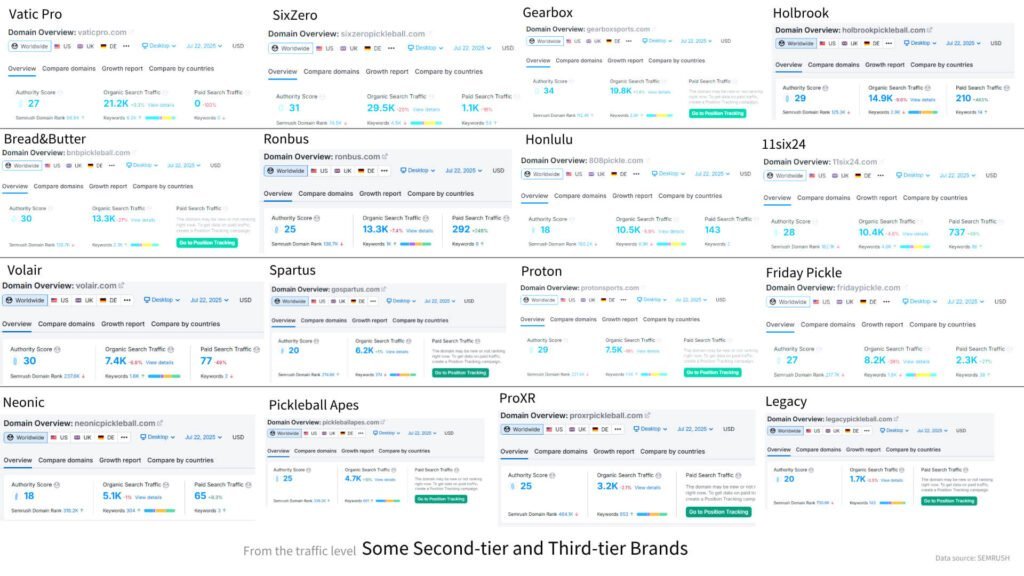
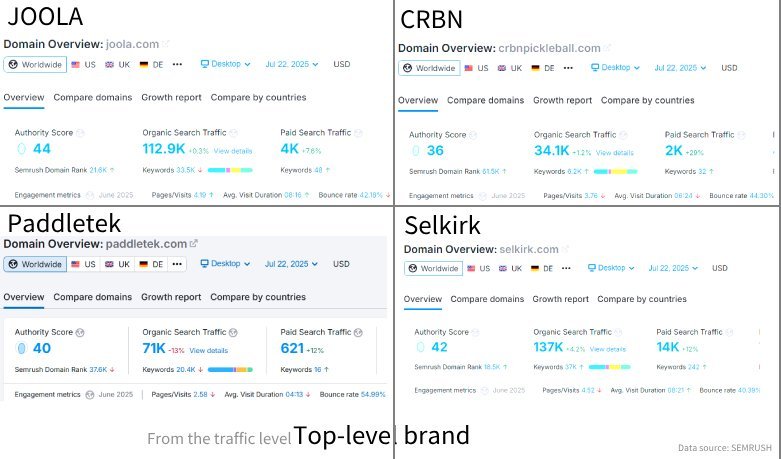
The pickleball market has exploded in recent years, and there are now hundreds of brands out there. You’ll see familiar names from other racquet sports, as well as brands that are solely focused on pickleball. Some of the popular brands you’ll encounter include JOOLA, CRBN, Selkirk, Honolulu, and Vatic Pro, to name just a few.
But here’s my honest take: for your first paddle, the brand name is one of the least important factors. The explosion of pickleball has led to a ton of new, direct-to-consumer brands that are offering incredible technology at a fraction of the price. They’re cutting out the middleman and passing the savings on to us, the players. Don’t get caught up in paying for a logo. Focus on the materials, shape, weight, and, most importantly, the price.
Paddle Prices for Players
This might be the most important piece of advice I can give you: do not spend over $150 on your first pickleball paddle. I’d even say the sweet spot is firmly under $100.
Why am I so adamant about this? Because your first paddle is a learning tool. You’re still discovering what kind of player you are. Are you a power player who loves to drive the ball? Or are you a control player who lives for the dink battle? You won’t know for sure until you’ve played for a while.
My recommendation is to find the “most cost-effective” paddle you can—one that uses quality materials without the pro-level price tag. Play with it for six months, nine months, maybe even a year. By then, you will have a deep understanding of what you like and what you don’t. You’ll know if you want something lighter, heavier, with more pop, or more spin. That’s the time to consider investing in a more expensive, specialized paddle that perfectly complements your style.
Before I reveal my favorite budget-friendly paddles, two last things.
First, while I’m sharing my experience, it’s always great to get more opinions. I’ve found some of the most honest and helpful reviews come from other players who are passionate about the sport and share their findings online. They’ll often compare multiple paddles and give you a real-world perspective on performance.
Second, and this is the absolute best advice I can give you: if you can, try a paddle before you buy it. Ask friends at your local court if you can hit a few balls with their paddles. See if a local shop has a demo program. Nothing, and I mean nothing, beats the feeling of a paddle in your own hand. Hitting a few dinks and drives will tell you more than a thousand online reviews ever could.
Best Pickleball Paddles Under $100
Okay, here we go. I’ve tested a lot of paddles in this price range, and these three consistently impress me with the value and performance they offer.
Paddleshop Planker Paddle

Paddle Specs:
Skill Level: Intermediate to Advanced
Paddle Height: 16.45”
Paddle Width: 7.4”
Core Thickness: 14mm/16mm
Face: 12k Ultra Weave Carbon Fiber with Durable Grit Surface
Core: Gen3 Fusion Polymer Honeycomb (Upgrade on original GEN3 core)
Average Weight: 7.7 oz(14mm),7.9-8.0oz(16mm)
Grip Length: 5.5”
Grip Type: Black Ultra-Comfort Grip
Grip Circumference: 4.18”
Swingweight: 115-118
Twistweight: 5.8-6.5
Paddle Price:$62.99(use the code:happy10off) from Paddlesshop
My First Impression: The Paddleshop Planker Paddle stands out as another strong contender in the affordable range. I appreciate its straightforward design and the focus on providing a solid, reliable paddle.
My On-Court Experience: I lent this paddle to a friend of mine who was just starting out, and I played with it myself for a few games. The Hybrid shape is immediately noticeable. My friend commented on how easy it was to make solid contact with the ball. For me, playing with it felt comfortable and forgiving. The carbon face provides a really nice, soft “pop.” It doesn’t have the crazy spin of the Prism Flash, but it has more inherent power. It was easy to serve deep and hit solid drives without a huge swing. At the net, it felt stable and easy to handle.
What I Love:
I tested the Planker side-by-side with the Joola MOD-TA 15 Pro 16mm. Control felt about the same, but the Planker had a little more power and a wider pop range, especially on hard swings.
Drives, volleys, and overheads hit with crisp, solid pop that rewards an aggressive style. The Gen3 Propulsion Core really works—I noticed the ball moving faster than with my usual paddle, thanks to better energy transfer on contact.
If you want to boost your power game, the Planker speeds up your shots but also challenges you to control them. The carbon fiber face gave me steady accuracy, letting me aim deep to the opponent’s backhand and force weak returns. At the net, it stayed stable even during fast rallies.
What You Should Know:
With more power, soft shots like dinks and drops need extra precision to keep them in.
My Verdict:
From the first game, it gave me a solid mix of power and control—no break-in needed. Dinks felt accurate, and drives or smashes hit with real force. The 12K carbon fiber face added dependable spin to my serves and slices, while the 117 swing weight felt balanced between quick handling and steady impact.
My regular group could tell the difference right away—two friends bought theirs after just one match. It’s not the lightest paddle (7.9–8.0 oz), but the weight is well balanced for an aggressive game.
If you’re an intermediate player who likes strength and wants one paddle that can handle almost any shot—without spending $200—the Planker is a great choice. It’s not a shortcut to skill, but it will raise the game of confident, attacking players.
Vatic Pro Prism Flash

Specifications:
- Surface – Raw TORAY T700 Carbon Fiber with heat compressed texturing
- Unibody Foam Inject Walls for an increased sweet spot and added control
- Average Weight 16mm – 7.9 – 8.2oz
- Total Length SH – 16.25 Inches
- Total Length LH – 16.375
- Width SH – 7.7 Inches
- Width LH – 7.625
- Grip Circumference – 4.125 Inches
- Grip has 2 polyurethane inserts to reduce shock and help with tennis elbow
- Core – Optimized C7 Polymers and high-grade performance honeycomb
- Core Thickness – 16mm
- Edge Guard: Anti-Abrasion TPU
Paddle Price:$89.99 from Vatic Pro used code:Paddlesshop
My First Impression: The Vatic Pro Prism Flash immediately caught my eye as a solid contender in the budget-friendly category. I expected corners to be cut. But holding it, the paddle felt balanced and well-constructed. It didn’t feel cheap at all.
My On-Court Experience: I took this paddle out for a two-hour session of drilling and games. The first thing I noticed was the spin. The T700 raw carbon fiber face is gritty, and I was getting significantly more action on my serves and cuts than I expected. For a beginner, this is an amazing feature to grow into. The control is the real star here. Dinking felt intuitive and precise. Because it’s not thermoformed, it has a softer feel than its more expensive cousins, which I actually think is a huge plus for beginners. It’s not overly powerful or “hot,” which makes it much easier to control your drops and resets. The 16mm polymer core does a great job of absorbing impact, and the sweet spot felt generous.
What I Love:
Unbeatable Spin: You’re getting a premium, spin-friendly raw carbon fiber face for a budget price. It’s a game-changer.
Elite Control: It’s a very forgiving, control-oriented paddle. It makes learning the soft game so much easier.
Incredible Value: The performance you get for the price is, in my opinion, the best on the market right now.
What You Should Know:
It’s Not a Power Paddle: If you’re looking for a paddle to blast winners from the baseline, this isn’t it. You have to generate your own power, which is actually good for developing proper mechanics.
My Verdict: For me, the Vatic Pro Prism Flash is the gold standard for a beginner’s first “serious” paddle. It gives you elite-level technology (the carbon fiber face) that you can grow into, combined with a forgiving and controllable feel that’s perfect for learning the fundamentals. It’s a paddle you can use for your first lesson and still be competitive with a year later.
11SIX24 Vapor Jelly Bean Paddle

Paddle Specs:
- Surface: 11SIX24 CFC Surface – 3 Layers. 2 raw toray T700 Carbon Fiber and 1 fiberglass
- Foam reinforced walls
- Average Weight – 8.0-8.3oz
- Total Length – 16.25 Inches
- Width – 7.75 Inches
- Grip Circumference – 4.125 Inches
- Grip Length – 5.75 Inches
- Core Thickness – 16mm
- Swing weight – 114-117
- Twist weight – 7.0
- Unique serial number
- Free paddle cover
- 1 Year Warranty
Paddle Price:$89.99(use the code:paddlesshop) from 11SIX24
My First Impression: The Paddleshop Planker Paddle stands out as another strong contender in the affordable range. I appreciate its straightforward design and the focus on providing a solid, reliable paddle.
My On-Court Experience: I lent this paddle to a friend of mine who was just starting out, and I played with it myself for a few games. The Hybrid shape is immediately noticeable. My friend commented on how easy it was to make solid contact with the ball. For me, playing with it felt comfortable and forgiving. The carbon face provides a really nice, soft “pop.” It doesn’t have the crazy spin of the Prism Flash, but it has more inherent power. It was easy to serve deep and hit solid drives without a huge swing. At the net, it felt stable and easy to handle.
What I Love:
I tested the Planker side-by-side with the Joola MOD-TA 15 Pro 16mm. Control felt about the same, but the Planker had a little more power and a wider pop range, especially on hard swings.
Drives, volleys, and overheads hit with crisp, solid pop that rewards an aggressive style. The Gen3 Propulsion Core really works—I noticed the ball moving faster than with my usual paddle, thanks to better energy transfer on contact.
If you want to boost your power game, the Planker speeds up your shots but also challenges you to control them. The carbon fiber face gave me steady accuracy, letting me aim deep to the opponent’s backhand and force weak returns. At the net, it stayed stable even during fast rallies.
What You Should Know:
With more power, soft shots like dinks and drops need extra precision to keep them in.
My Verdict:
From the first game, it gave me a solid mix of power and control—no break-in needed. Dinks felt accurate, and drives or smashes hit with real force. The 12K carbon fiber face added dependable spin to my serves and slices, while the 117 swing weight felt balanced between quick handling and steady impact.
My regular group could tell the difference right away—two friends bought theirs after just one match. It’s not the lightest paddle (7.9–8.0 oz), but the weight is well balanced for an aggressive game.
If you’re an intermediate player who likes strength and wants one paddle that can handle almost any shot—without spending $200—the Planker is a great choice. It’s not a shortcut to skill, but it will raise the game of confident, attacking players.
Conclusion
I truly hope sharing my personal experiences and thoughts helps you solve the puzzle of how to choose a pickleball paddle. The journey starts with that first paddle, and finding the right one makes all the difference. Get out there, try some out if you can, and most importantly, have fun on the court!



Leave a Reply